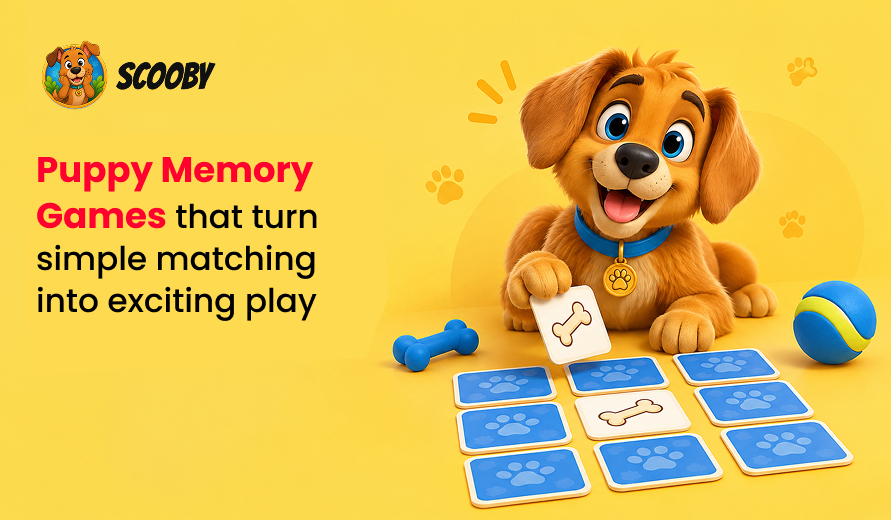
Puppy Memory Games make matching fun with adorable puppy pictures, simple rules, and exciting challenges. Enjoy online matching activities while practising visual memory, attention, and picture recognition.
Puppy Memory Games offer a fun way for children and dog lovers to enjoy matching games with adorable puppy pictures. These games combine cute animals, colourful cards, and simple rules to create an enjoyable experience for players of all ages. Whether you prefer matching pictures on a screen or using printed cards at home, each round brings a small challenge that keeps the activity interesting.
The main idea is simple: remember where each picture appears and find its matching pair. Players turn over cards, study the images, and recall their earlier positions. Puppy faces, playful dogs, colourful collars, and familiar pet accessories make every round feel cheerful. With short rounds and easy instructions, these activities are perfect for family time, school breaks, or a quiet afternoon at home.
What Are Puppy Memory Games?
Puppy Memory Games are matching activities featuring pictures of puppies, dogs, and pet-related objects. Players usually receive a set of face-down cards arranged in rows. Each picture has an identical partner somewhere on the board. The goal is to remember each image's location and find every matching pair.
For example, a game might include a golden puppy, a small white dog, a brown puppy with floppy ears, and a playful dog holding a ball. Each image appears twice. On their turn, players turn over two cards. If the pictures match, the pair stays visible or is removed from the board. If they do not match, the cards are turned face down again.
These activities are easy to understand because they do not require complicated instructions. Younger children can start with a few pairs, while older players can try larger boards with more pictures. Some versions also feature sounds, animations, timers, and rewards for completing a round.
Puppy matching activities are available as browser-based games, mobile apps, printable worksheets, and physical card sets. Each format follows the same basic idea while offering a different way to play.
How Puppy Memory Games Work
Most Puppy Memory Games begin with a set of cards placed face down. Players can see the backs of the cards but not the pictures underneath. The challenge is to remember the location of each puppy image after turning it over.
A typical round follows these steps:
Start the game and look at the cards on the board.
Select one card to reveal a puppy picture.
Select another card and compare the images.
Keep the cards visible if the pictures match.
Remember the pictures and their positions when the cards do not match.
Continue until every pair has been found.
Some games allow players to take as much time as they need, while others set a time limit. Timed rounds add excitement for those who enjoy a challenge, but untimed versions are often more suitable for beginners.
The difficulty depends on the number of cards, the similarity of the pictures, and the time available to remember each position. A small board with four pairs is easier than a large board with twelve or more pairs of similar-looking puppies.
Benefits of Puppy Picture Matching
Puppy pictures make memory activities friendly and inviting. Their different expressions, ear shapes, fur colours, and playful poses give players interesting details to notice while searching for matching images.
A board may feature puppies sleeping on cushions, chasing toys, sitting beside food bowls, or wearing colourful bandanas. These familiar scenes add variety without making the rules difficult to follow.
Finding a matching pair also provides a sense of achievement. Every correct match brings the player closer to completing the board. Even when two cards do not match, the revealed pictures help players remember where certain images are located.
These activities also suit short periods of free time. A player can complete a small round in a few minutes without a long introduction or complicated setup. Parents can play alongside children, siblings can take turns, and friends can compete to see who finds the most pairs.
Different Types of Puppy Memory Games
There are several ways to enjoy puppy-themed matching activities. Each format offers a slightly different experience, so players can choose the one that suits their interests.
1. Classic Puppy Card Matching
Classic card games use pairs of puppy pictures printed on cards. Players shuffle the cards, arrange them face down, and take turns revealing two cards. This format works well for family game nights, classrooms, and activities away from screens.
2. Online Puppy Matching Activities
An Online Virtual Pet Game may include matching rounds alongside other animal-themed activities. Players can tap or click cards to reveal images, collect points, and complete short challenges. Some versions feature sound effects, colourful backgrounds, and simple animations.
Browser-based games are convenient because players can start a round without preparing physical cards. Many also work on phones, tablets, and computers.
3. Puppy Memory Games for Children
Games for younger children often feature large pictures, fewer cards, and clear differences between images. A board might contain four or six pairs featuring puppies of different colours. Simple layouts help children focus on the pictures instead of struggling with complicated controls.
4. Timed Memory Challenges
Timed versions ask players to find all matching pairs before the clock reaches zero. Some award points for quick matches, while others record how long each round takes.
These challenges are suitable for players who enjoy friendly competition. However, there is no need to rush when the main purpose is relaxed play.
5. Puppy and Pet Object Matching
Some games combine puppy pictures with objects such as balls, food bowls, collars, beds, and toys. Depending on the rules, players may match identical pictures or connect a puppy with an item associated with it.
This variation introduces additional picture types and gives players more details to remember.
How to Play a Puppy Matching Game
Getting started is simple, even for someone who has never played a matching game before. Choose a version with a small number of cards and take a moment to understand how the controls work.
Begin by turning over one card and paying attention to the picture. Then select a second card. If the images match, keep the pair visible. If they differ, remember both pictures before turning them face down again.
A useful approach is to remember the board in small sections. For example, you might remember that a brown puppy appeared near the upper-left corner and a white puppy appeared near the bottom. When one of those pictures appears again, you can return to the location where its partner was previously seen.
Avoid turning over cards too quickly without looking carefully. Taking a brief moment to notice each image and its position can make the next turn easier.
For a first round, try a board containing four pairs. After completing it, move to six or eight pairs if the activity feels comfortable. This gradual change gives beginners time to become familiar with the rules before trying a larger challenge.
Skills Children Can Practice Through Matching
Puppy matching activities provide opportunities to practice several useful skills during play. They are not a replacement for formal education, but they can make simple learning activities more enjoyable.
Visual memory: Children practice remembering which pictures appeared and where the cards were located.
Attention: Players need to look carefully at each image and notice details such as fur colour, facial markings, and ear shape.
Picture recognition: Matching activities help children notice similarities and differences between images.
Patience: Players may need several turns to find a pair. Waiting, checking earlier positions, and trying again are natural parts of the activity.
Turn-taking: When playing with another person, children can practice waiting for their turn and following shared rules.
Decision-making: Before selecting a second card, players can consider which location might contain the matching image.
Parents can make the activity more interactive by asking simple questions. For example, they might ask which puppy has floppy ears or which picture appeared near the bottom of the board. These questions encourage children to pay attention without making the game feel like a test.
Puppy Memory Games for Different Age Groups
The best board size depends on the player's age, experience, and interest in the activity.
Toddlers and Preschoolers
Very young children may enjoy two to four pairs of large, clearly different puppy pictures. An adult can help them name the animals, identify colours, and take turns revealing cards. Physical cards may be easier for some children to handle than small on-screen controls.
Primary School Children
Children who understand basic matching rules can try six to twelve pairs. Different breeds, puppy poses, and background colours make the activity more varied. They may also enjoy playing with a sibling or parent and counting how many pairs each person finds.
Teenagers and Adults
Older players may prefer larger boards, similar-looking pictures, limited time, or fewer chances to make mistakes. Scorekeeping and personal best times can add a competitive element.
Families Playing Together
A family can choose a board that feels comfortable for everyone. Younger players may take more time, while older players can offer gentle reminders about the location of previously revealed pictures. The main purpose is to enjoy a shared activity rather than focus only on winning.
Creative Ways to Make Matching More Fun
A familiar matching game can feel different with a few small changes. Players can try a new rule, change the card arrangement, or create a friendly challenge.
Here are some simple ideas:
- Name each puppy: Give the puppies names such as Coco, Max, Daisy, or Bruno before starting.
- Use a breed theme: Choose cards featuring different breeds, such as beagles, poodles, dachshunds, and golden retrievers.
- Play in pairs: Work with another person and discuss which cards you remember.
- Set a personal goal: Try to finish the board with fewer unsuccessful matches than in the previous round.
- Add a storytelling activity: Make up a short story about the puppies after finding their matching pictures.
- Change the card count: Increase the number of pairs once a small board becomes easy.
- Try a colour challenge: Pay attention to the colours and markings on each puppy before selecting the next card.
These ideas keep the activity fresh while preserving the simple matching rules. Players can choose whichever variation suits their mood and available time.
Puppy Matching Activities in Virtual Pet Games
Virtual Pet Games often include activities that let players interact with digital animals. Puppy matching rounds fit naturally into these experiences, offering a short break from feeding, grooming, dressing, or playing with a virtual puppy.
A Digital Pet Game might feature a matching activity where players pair puppy faces to earn decorative items. Another version could use memory rounds as a bonus activity between other tasks. The animal theme ties matching to the familiar routines of caring for a digital companion.
A Virtual Pet Simulator may also include rewards for completing short challenges. Depending on the game, players might receive a colourful collar, a toy, a new background, or a cheerful animation after finding every pair.
Some players enjoy games that let them adopt a Virtual Pet and spend time caring for it, while others prefer a standalone matching activity. An Online Pet Game that combines several simple activities can offer both options in one place.
When choosing a game for children, check whether it contains advertisements, in-app purchases, external links, or chat features. A simple layout with clear instructions and suitable privacy settings is a sensible choice for younger players.
Tips for Choosing the Right Game
A good puppy matching game should be easy to understand and comfortable to play. The pictures should be clear enough to distinguish, and the controls should respond in a predictable way.
Consider these points before choosing a game:
Clear images: Puppy faces and other pictures should be easy to identify without unnecessary visual clutter.
Adjustable difficulty: Different board sizes allow beginners and experienced players to enjoy the same type of activity.
Simple controls: Tapping or clicking cards should feel straightforward, particularly for younger children.
Reasonable round length: Short rounds are useful when players want a quick activity between other tasks.
Suitable content: Choose games with age-appropriate pictures, instructions, and online features.
Comfortable pace: Untimed play can be a good choice for beginners, while a timer may suit people who enjoy a challenge.
Device compatibility: If playing online, check that the game works on the intended phone, tablet, or computer.
You do not need a game with many extra features to enjoy the activity. Clear pictures, sensible rules, and a suitable level of difficulty are often enough to make a matching game enjoyable.
Final Words
Puppy Memory Games turn a simple matching task into a cheerful activity filled with cute pictures, small challenges, and satisfying moments. Players reveal cards, remember puppy images, and search for matching pairs while practising attention, picture recognition, and visual memory.
From printed cards to online challenges and virtual pet activities, there are plenty of ways to enjoy puppy-themed matching. Beginners can start with a few pairs, while experienced players can try larger boards or timed rounds. Families can also play together, making it a pleasant choice for shared free time.
The best part is that the rules remain simple, so players spend less time preparing and more time enjoying the game. Whether you want a quick screen break or a playful family activity, Puppy Memory Games offer an easy way to bring adorable dogs and matching fun together.
FAQ
What are Puppy Memory Games?
Puppy Memory Games are matching activities that use puppy pictures arranged in pairs. Players turn over cards, remember their positions, and try to find identical images.
Are puppy memory games suitable for children?
Yes, many versions are suitable for children. Choose a game with clear pictures, simple rules, and a suitable number of cards for the child's age and experience.
Can puppy memory games help with memory practice?
They give players opportunities to practice remembering pictures and their locations. Children can also practice attention, picture recognition, and turn-taking while playing.
Can I play puppy memory games online?
Yes. Many browser-based and mobile games offer puppy picture matching. Some can be played directly on a website, while others require an app.
How many cards should beginners use?
Beginners can start with four pairs, or eight cards in total. Once they feel comfortable with the rules, they can try six or eight pairs.