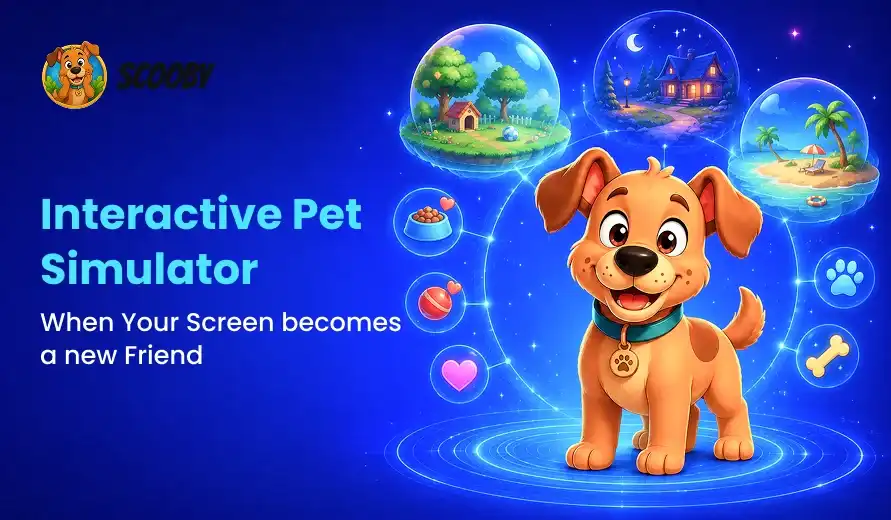
An Interactive Pet Simulator lets players care for a digital companion through feeding, games, training, customisation, daily routines, rewards, and choice-based activities.
An interactive pet simulator gives players a digital animal to care for, play with, feed, train, and spend time with. Rather than following a single path, the game responds to the player's actions and creates different experiences over time. A pet may become happier with regular care, react differently to missed activities, or develop new habits based on how it is treated. This makes the experience feel more personal while giving players many simple activities to enjoy.
This type of game combines pet care, simulation, mini-games, daily activities, customization, and choice-based gameplay. The main appeal comes from having a digital companion that feels connected to the player's decisions. Every feeding session, game, walk, rest period, or training activity can become part of the pet's ongoing story.
What Is an Interactive Pet Simulator?
An Interactive Pet Simulator is a digital game in which players care for a virtual animal while making decisions that affect its routine, mood, appearance, skills, or relationships.
The pet can be a puppy, kitten, bird, rabbit, fantasy creature, or another digital companion. Depending on the game, players may be able to:
- Feed and care for their pet
- Choose meals and snacks
- Play mini-games
- Give toys and gifts
- Train different abilities
- Change outfits and accessories
- Decorate the pet's home
- Take the pet on virtual walks
- Complete daily activities
- Monitor mood, energy, and happiness
- Make choices that affect future events
The key difference between a basic digital pet and a more interactive simulator is the response system. The virtual animal does not simply repeat the same actions. Its behavior can change based on what the player does.
For people searching for an Online Virtual Pet Game, this format offers more than simple feeding and cleaning tasks. It can provide a complete digital environment where the pet has routines, activities, rewards, and reactions.
How Choices Shape the Pet's World
Choices are at the heart of this type of game. A player's actions can influence what happens next, making each player's experience slightly different.
For example, imagine a player who regularly takes their virtual dog outside. Over time, the game could offer outdoor activities more often. Another player might spend more time playing indoor mini-games, leading to a different collection of rewards and activities.
A simple choice system may include:
Care choices: Players decide when to feed, rest, clean, or care for their pet.
Activity choices: Players select between games, walks, training sessions, or quiet time.
Style choices: Players choose clothes, colours, accessories, hairstyles, and room decorations.
Social choices: Players may decide how their pet interacts with other virtual animals.
Reward choices: Players can select which items, toys, or upgrades they want to receive.
These decisions can give the simulator a personal feel because two players may have pets with different routines, preferences, appearances, and progress.
An Online Pet Game can use these choices to give players a sense of ownership. Rather than receiving the same experience every time, players can decide how to spend their time with their digital companion.
A Digital Pet With Its Own Routine
A strong Interactive Pet Simulator can give the virtual animal a daily routine. The pet may become hungry, sleepy, playful, excited, or tired at different times of day.
A morning session could begin with feeding and grooming. Later, the player might take the pet for a walk or play a mini-game. At night, the pet may need rest before the next day's activities become available.
This routine gives players a reason to return regularly. Rather than completing everything in one sitting, the game can offer small activities throughout the day.
The routine can also change based on player decisions. A player who spends more time training may see more skill-based tasks. Someone who focuses on decoration may receive more home-design options.
For fans of Virtual Pet Games, this evolving routine can make each session feel less predictable. The player has familiar care tasks while also having room for new activities and events.
Pet Personality and Changing Behaviour
Personality can make a virtual companion feel more interesting. A simulator can assign different traits to pets or allow those traits to develop through repeated activities.
One pet might enjoy games and become highly energetic. Another could prefer quiet activities and spend more time resting. A curious pet may interact frequently with new objects, while a playful pet may request games more often. Behavior can also be linked to care.
For example:
- Regular play may support a cheerful mood.
- Consistent rest may help maintain energy.
- Training may improve selected skills.
- Different foods may affect preferences.
- New toys may create fresh activities.
- Frequent interaction may open additional companion events.
The goal is not to make every decision permanent. Instead, the game can give players visible feedback so they can understand how their choices affect the pet.
Mini-Games Add More Than Simple Pet Care
Mini-games can make an Interactive Pet Simulator more dynamic and varied. Players can take a break from routine care and take on short challenges with their digital companion.
Possible mini-games include:
- Ball-catching challenges
- Memory games
- Obstacle courses
- Feeding challenges
- Treasure hunts
- Puzzle activities
- Racing games
- Music-based games
- Hide-and-seek
- Reaction challenges
Successful results may provide coins, toys, food, costumes, or other virtual rewards. Some games may also affect pet skills, such as speed, memory, focus, or coordination.
Short activities work well because players can enjoy them without needing a long gaming session.
Customisation Makes Each Pet Different
Personalisation is another major part of virtual pet games. Players often want their digital companion to look different from everyone else's.
Customisation can cover several areas:
Pet Appearance
Players may be able to select fur patterns, colours, eye styles, ears, tails, and other visual features.
Clothing and Accessories
Hats, collars, glasses, jackets, costumes, and seasonal items can give the pet a distinctive appearance.
Home Design
The pet's living space can become another area for personal choices. Players might select furniture, beds, toys, wall decorations, flooring, and room themes.
Name and Identity
Giving a pet a personal name can make the relationship feel more meaningful. Some games also offer badges, titles, or profile cards tied to the pet.
These options help turn a general simulator into a personal digital space.
Why Choice-Based Gameplay Feels Personal
The strongest feature of an Interactive Pet Simulator is the connection between action and result.
If every player receives the same pet, personality, activities, and outcomes, the experience can quickly become repetitive. Choice-based systems introduce variation.
Consider two players with the same virtual kitten.
The first player spends most of their time playing mini-games, collecting toys, and training the kitten. The second player focuses on clothing, room decoration, feeding, and relaxation.
After several days, their pets can have different looks, routines, item collections, and progress. The core game remains the same, but the individual experience differs.
For anyone who wants to adopt a Virtual Pet, this type of game can provide a simple way to care for a companion without the responsibilities of a real animal. The player can choose activities based on their preferred pace and available time.
Daily Rewards and Long-Term Progress
Daily rewards can give players another reason to return. A game may offer a small gift for completing routine activities, checking on the pet, or finishing a daily challenge.
Progress systems may include:
- Pet levels
- Skill points
- New rooms
- New toys
- Clothing collections
- Food collections
- Achievement badges
- Special activities
- Seasonal items
Progress should be easy to understand. Players should know what they have achieved and what to work toward next.
A clear progress system can also support long-term play without complicating the experience.
A Virtual Pet Simulator may also use milestones to introduce new areas, items, activities, or companion behaviors. This gives players a reason to continue caring for their pet over many sessions.
Social Features in Virtual Pet Games
Some Virtual Pet Games include social features that let players share parts of their virtual pet experience.
Depending on the game, players may be able to showcase pet outfits, compare collections, visit another player's virtual space, or participate in friendly competitions.
Community activities can add variety while keeping the main focus on pet care. Safe, age-appropriate communication tools are especially important when a game is designed for younger audiences.
What Makes an Interactive Pet Simulator Fun?
Several elements can contribute to a strong virtual pet experience:
Responsive pets: The animal should react to player actions in visible and understandable ways.
Meaningful choices: Decisions should have some effect instead of being decorative buttons.
Variety: Different games, activities, items, and events can reduce repetition.
Personalisation: Players should have enough options to create a pet that feels like their own.
Simple controls: Feeding, playing, dressing, and caring for the pet should be easy to understand.
Regular activities: Small daily tasks can give players reasons to return.
Clear progress: Players should be able to see how their pet is developing.
When these parts work together, the simulator can become more than a collection of mini-games. It can feel like an ongoing digital pet story.
Interactive Pet Simulator for Different Types of Players
Virtual pet games can appeal to a range of gaming preferences.
Players who enjoy casual games may prefer short care sessions and quick mini-games. Players who prefer simulation games may enjoy managing routines, food, activities, and pet development.
Creative players may spend more time on outfits and home decoration. Competitive players may focus on challenges, races, scores, and achievements. Players seeking a relaxing experience may prefer feeding, grooming, walking, and quiet companion activities.
This flexibility is one reason the format can work across different age groups and gaming habits.
A Digital Pet Game can also suit people who prefer short gaming sessions. A few minutes may be enough to feed a pet, play a quick activity, change an outfit, or check the virtual home.
The Future of Choice-Based Virtual Pets
As interactive game design continues to evolve, virtual pets can become more responsive and diverse. Future games may offer larger worlds, more nuanced personalities, broader customization options, and richer activity systems.
A pet could remember specific player actions and respond differently later. A choice made during one activity might influence a later event. Seasonal changes could affect available activities, outfits, locations, and items.
Final words
An Interactive Pet Simulator creates a digital world where players care for a virtual animal and see the results of their decisions. Feeding, playing, training, decorating, customizing, and daily routines all contribute to an ongoing pet experience.
The most compelling aspect is that the player's choices shape the journey. One person may create an energetic pet that loves games, while another may build a calm companion focused on relaxation and personal style.
By combining pet care, mini-games, customization, rewards, routines, and responsive behavior, an Interactive Pet Simulator can offer a playful experience that evolves. Instead of simply watching a digital animal on a screen, players become part of its daily world, with each decision helping define what happens next.
FAQ
What is an Interactive Pet Simulator?
An Interactive Pet Simulator is a digital game where players care for a virtual animal by feeding, playing with, training, grooming, and customising it. The pet's behaviour and activities can change based on the player's choices.
How does an Interactive Pet Simulator respond to player choices?
The pet can react to different activities, routines, and care decisions. Regular play, training, feeding, or rest may affect its mood, skills, preferences, or available activities.
Can I customise my virtual pet?
Yes. Many virtual pet experiences allow players to change the pet's appearance, clothing, accessories, name, toys, and living space. These options help each player's companion feel more personal.
What activities are available in a Digital Pet Game?
Activities can include feeding, grooming, walking, training, puzzle games, racing, treasure hunts, decorating, collecting items, and completing daily challenges.
Is an Online Virtual Pet Game suitable for casual players?
Yes. An Online Virtual Pet Game can be suitable for casual players because many activities can be completed in short sessions. Players can simply check on their pet, complete a few care tasks, and return later.