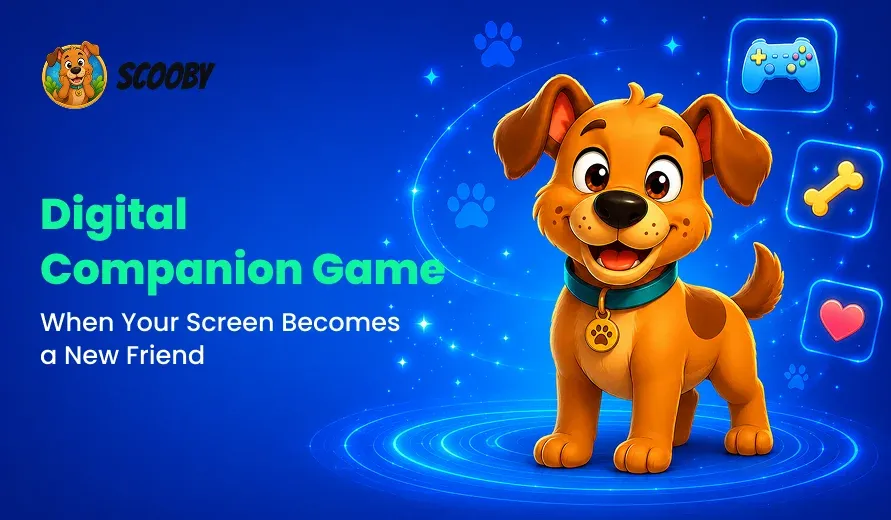
A Digital Companion Game lets you care for, play with, train, and customise a virtual friend while enjoying daily activities, mini-games, rewards, and fun.
A digital companion game gives players a virtual character or pet that responds to their actions and offers activities to enjoy. Instead of controlling a character only during a traditional game, players can spend time caring for, talking to, playing with, and customising a digital companion.
These games can feature puppies, kittens, fantasy animals, robots, cartoon characters, or other virtual personalities. The companion may have its own needs, moods, reactions, and daily activities. Players can feed a virtual pet, give it toys, practice commands, decorate its room, or simply spend time together.
For people who enjoy casual games, a digital companion can provide a simple form of entertainment. It does not require a real animal, physical equipment, or a complicated gaming setup. A phone, tablet, or computer can be enough to access many types of virtual companion experiences.
What Is a Digital Companion Game?
A digital companion game is built around interaction with a virtual character or animal. The main activity is often spending time with the companion rather than completing difficult missions or competing against other players.
The companion may respond when the player taps the screen, selects an activity, gives an item, or types a message. Some games use simple animations and preset responses, while others may offer more advanced conversational or behavioural systems.
Common features can include:
- Feeding
- Grooming
- Playing
- Talking
- Training
- Walking
- Resting
- Giving treats
- Customizing appearance
- Decorating a virtual home
The exact features depend on the game. Some focus mainly on pet care, while others combine pet care with mini-games, stories, rewards, and character development.
How Does a Digital Companion Game Work?
Most digital companion games begin with character selection. Players may choose an animal, cartoon character, robot, or another virtual friend.
After selecting a companion, players may be prompted to give it a name. The game then presents a range of activities accessible via buttons, menus, rooms, or icons.
For example, a food icon may open a collection of meals and treats. A toy icon may display a variety of activities. A bed may allow the companion to rest.
Choose Your Virtual Friend
Choosing a companion is an important part of the experience. Different games provide different types of characters.
Popular choices include:
- Puppies
- Kittens
- Rabbits
- Birds
- Hamsters
- Fantasy creatures
- Robots
- Cartoon characters
Some games offer several breeds or appearances. Others let players change the character after selection.
Feed and Care for Your Companion
Pet care is one of the most common features in a Digital Pet Game. The virtual character may become hungry after playing or completing other activities.
Players can provide food, water, snacks, and treats. Some games offer several food types, while others use a simple feeding system.
Care can also include grooming. Players may brush the character's fur, bathe it, clean its paws, or choose accessories.
Other basic care tasks can include:
- Checking energy
- Providing water
- Giving treats
- Cleaning the living area
- Allowing the character to sleep
- Checking happiness
These activities give players a simple routine. The game can show which need should be handled next.
Play Mini-Games Together
Playtime adds variety to digital companion experiences. Instead of only feeding or grooming the character, players can complete short activities together.
Common mini-games include:
- Fetch
- Ball games
- Memory puzzles
- Matching games
- Catching objects
- Running challenges
- Jumping games
- Reaction activities
The companion may appear on the screen during these activities and respond to what happens.
Some mini-games award coins, stars, points, or other rewards. These rewards can later be used to purchase food, toys, clothing, or decorations.
Players can switch between activities to keep their sessions varied.
Talk to Your Digital Companion
Some digital companion games include conversation features. Players may be able to select dialogue options, type messages, or use voice input.
The companion can respond with text, sounds, animations, or preset dialogue.
The conversation system varies by game. Some titles offer a limited set of responses, while others use artificial intelligence to generate more varied replies.
Players should review the game's privacy information when conversation or voice features are available. It is helpful to know what information the game collects and how messages are handled.
A conversation feature can make the companion feel more interactive, but it remains part of a digital game or service.
Build a Daily Routine
A routine can make a digital companion game easier to play. Players can begin by checking the character's needs before choosing an activity.
A basic routine may include:
- Check hunger.
- Give food or water.
- Check energy.
- Allow the companion to rest.
- Complete a grooming task.
- Play a mini-game.
- Practice a training command.
- Collect available rewards.
- Change clothing or accessories.
- Spend some time talking or playing.
Not every game contains all of these features. Players can adjust the routine according to the activities provided.
A routine can also make it easier to keep track of the companion's needs.
Train Your Virtual Friend
Training can add another layer to a virtual companion game. Players may be able to teach simple commands or complete short training sessions.
Common commands include:
- Sit
- Stay
- Come
- Fetch
- Jump
- Roll over
- Follow
The training method depends on the game. Some use buttons, while others use timing challenges or voice commands.
Successful training may provide points, treats, coins, or access to new activities.
Training can also give players something structured to do during a session instead of focusing only on food and grooming.
Customise Your Digital Companion
Customisation allows players to give their virtual friend a personal appearance.
Depending on the game, players may be able to change:
- Clothing
- Collars
- Hats
- Costumes
- Colors
- Accessories
- Toys
- Hairstyles
- Backgrounds
Some games also allow changes to the companion's home.
Give Your Companion a Comfortable Home
A virtual home provides a place for the companion to eat, sleep, play, and spend time.
Some games offer a single room, while others provide several areas. A bedroom may contain a bed, while a playroom may contain toys.
Earn Rewards and Unlock New Items
Rewards can give players additional reasons to complete daily activities.
Players may receive:
- Coins
- Stars
- Points
- Treats
- Toys
- Clothing
- Accessories
- Furniture
Rewards may come from feeding, grooming, training, playing mini-games, or completing daily tasks.
Virtual currency can often be used to purchase new items. Players may want to save enough currency for regular care supplies before spending it on decorations.
Some games also use a level system. Completing activities can increase progress and unlock new items or areas.
Digital Companion Games for Children
A digital companion game can be suitable for children when it offers simple controls and age-appropriate content.
Children may enjoy feeding a virtual pet, playing mini-games, changing clothing, and decorating a room.
Parents should check the game before allowing a child to play. Important areas include:
- Age rating
- Advertisements
- Chat features
- Voice features
- Privacy settings
- In-game purchases
- Data collection
Digital Companion Games for Adults
Adults can also enjoy virtual companion games as casual entertainment. A Virtual Pet Simulator can be checked during a short break without the physical responsibilities of real pet ownership.
Players can feed the companion, play a mini-game, change its appearance, or complete a short training session.
A digital companion does not require real-world food, outdoor walks, veterinary appointments, or physical space.
However, a digital character is not a replacement for a real animal or human relationship. It is a form of digital entertainment centred on interaction with a virtual character.
How to Choose a Good Digital Companion Game
Before selecting a game, consider the features that matter most to you.
Companion Choices
Check whether the game features puppies, kittens, fantasy animals, robots, or other characters that interest you.
Care Activities
Look for feeding, grooming, rest, playtime, and other care features if you want a pet-focused experience.
Conversation Features
If talking with the companion matters to you, check whether the game offers preset dialogue, text chat, or voice chat.
Mini-Games
Several mini-games can provide more variety than a game based only on care tasks.
Customization
Check whether you can change clothing, accessories, character appearance, toys, and the virtual home.
Privacy
Review privacy information before using chat or voice features.
Device Support
Check whether the game works on your preferred phone, tablet, or computer.
Online Virtual Pet Game Features to Check
An Online Virtual Pet Game can offer many of the same care activities as other digital pet titles. Players may be able to feed an animal, play mini-games, customise its appearance, and manage its virtual home.
Before choosing an online title, check its controls, available pet choices, age rating, advertisements, and purchase settings.
Some games may also offer account-based progress, daily rewards, or additional activities that unlock as players continue playing.
Virtual Pet Games for Different Types of Players
Virtual Pet Games can appeal to players who enjoy simple animal care, character interaction, and casual activities. Some games focus on a single animal, while others offer several companion options.
Players seeking broader choice can select a game with multiple animal types. Someone who prefers a puppy-focused experience may choose a title centred on dog care and training.
The available features can also vary. Some games focus on feeding and grooming, while others add mini-games, customisation, conversation, and virtual homes.
Adopt a Virtual Pet and Start a Routine
Some games let players adopt a Virtual Pet by choosing an animal, giving it a name, and starting its care routine. The adoption process can vary from one game to another.
Another option is an Online Pet Game, where players can access pet-care activities through a web browser or another online platform.
Tips for Enjoying a Virtual Companion
Start each session by checking what your companion needs. This can help you decide whether to provide food, allow rest, groom, or start a game.
Try different activities rather than repeating one task. Use different toys, practice several commands, and change accessories when available.
Keep some virtual currency for basic care items. Decorative purchases can wait until the companion has enough food and other supplies.
Final Words
A digital companion game gives players a virtual character to care for, play with, train, customise, and sometimes talk to. From feeding and grooming to mini-games, rewards, and home decoration, these games offer many simple activities.
The experience suits children and adults who enjoy casual animal- or character-based games. Players can choose a companion, give it a name, create a daily routine, and spend time completing activities together.
Whether you prefer a playful puppy, a curious kitten, a fantasy creature, or another virtual character, a digital companion can turn a phone, tablet, or computer screen into a fun place for everyday digital interaction.
FAQ
What is a Digital Companion Game?
A digital companion game is a game centred around interaction with a virtual character or animal. Players may feed, groom, train, play with, talk to, and customise their companion.
What types of digital companions can I have?
Depending on the game, you may choose puppies, kittens, rabbits, birds, robots, fantasy animals, or cartoon characters.
Can I talk to a digital companion?
Some games support text or voice conversations, while others use preset dialogue and simple reactions.
Can children play digital companion games?
Many are suitable for children, but parents should check the age rating, privacy settings, advertisements, chat features, and purchase options.
Can I customise my virtual companion?
Many games allow players to change clothing, colours, accessories, toys, and home decorations.